Front page lead
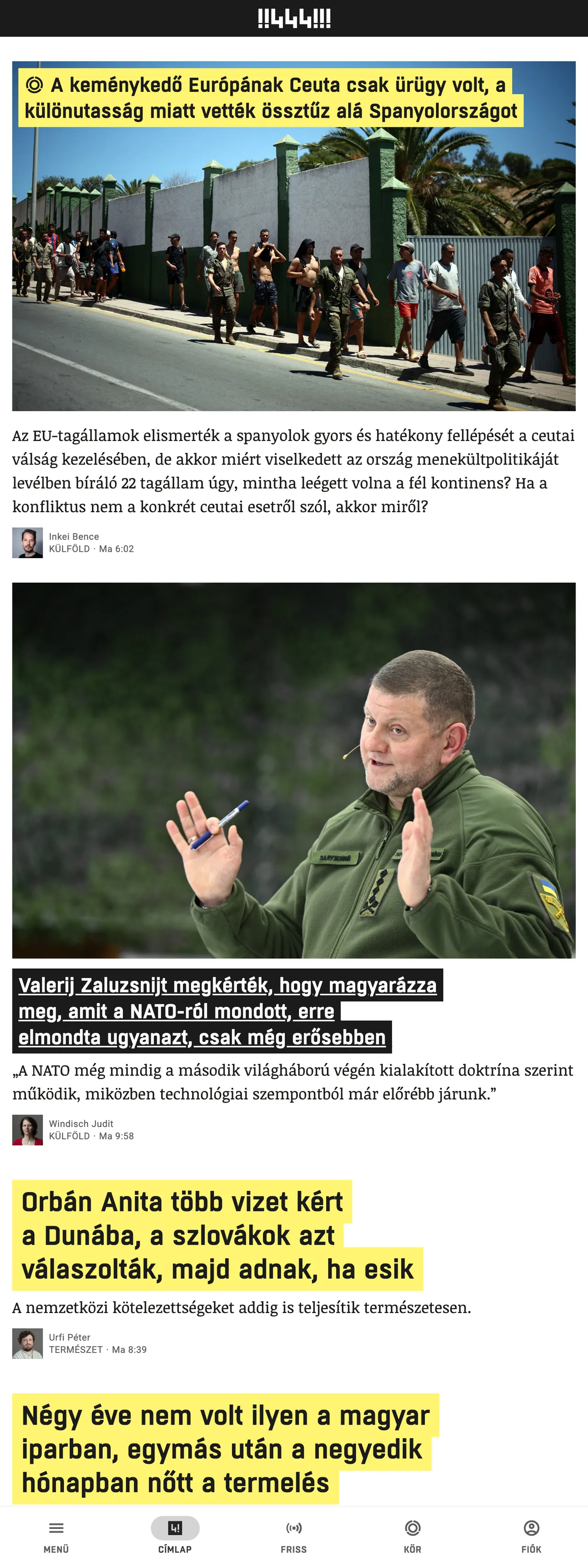
The EU acknowledged Spain's swift handling of the Ceuta crisis, but questions arise about why 22 member states criticized its refugee policy so harshly, suggesting the conflict was about more than just the Ceuta incident itself.
After being asked to clarify his remarks on NATO, Valeriy Zaluzhnyi reiterated his previous statement, emphasizing that NATO still operates on World War II-era doctrines despite technological advancements.
Hungary requested increased water flow in the Danube River, to which Slovakia responded that they would provide it only when it rains, though they assured that current international obligations would still be met.
For the fourth month in a row, industrial production in Hungary has increased, a trend not seen since 2022 when the sector experienced a continuous decline.
According to an expert, Hungary's largest electricity producer, the Paks Nuclear Power Plant, is now financially depleted, having had all its profits siphoned off by the Orbán government.
The country must spend billions more on electricity due to the heatwave causing reduced power generation, while agricultural lands suffer from drought. Paks, despite cheap production, has seven of its eight turbines offline.
Companies like Telekom are mandating two-week remote work, while others like Mol require office presence. The article explores effective work organization during the energy crisis and where energy consumption truly lies.
A radio play, created 12 years ago with public funds and based on an author's book, was broadcast by Kossuth Radio, revealing the story behind its initial censorship.

 Hungary