Front page lead
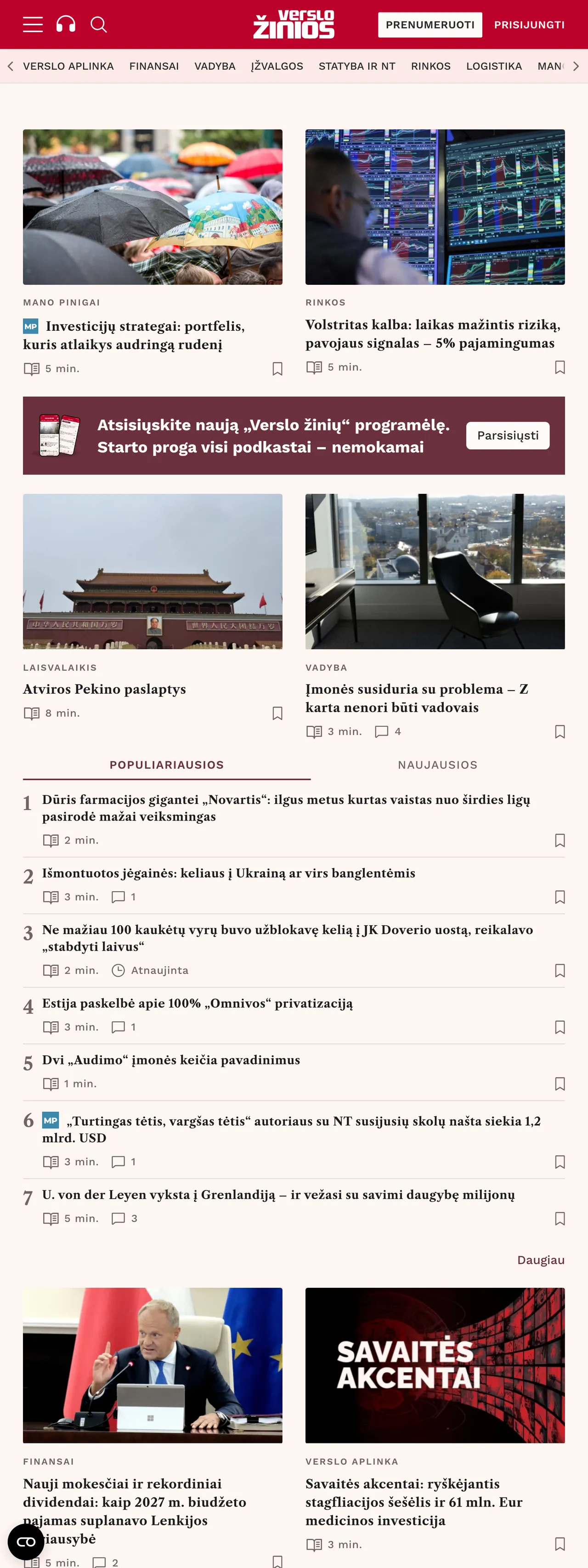
This article discusses investment strategies and recommends a portfolio designed to navigate a potentially volatile autumn season, offering guidance for investors facing market uncertainty.
This report from Wall Street suggests that it is time for investors to decrease their risk exposure, highlighting a 5% yield as a potential warning sign for the market.
An exploration into the lesser-known aspects and secrets of Beijing, offering insights into the city's culture and hidden facets.
This article highlights a growing challenge for businesses as Generation Z employees show a reluctance to take on managerial roles, impacting corporate leadership pipelines.
A significant setback for the pharmaceutical giant Novartis as a drug developed over many years for heart disease proves to be largely ineffective.
An article discussing the fate of dismantled power plants, with options for their relocation to Ukraine or repurposing as wave boards, highlighting potential uses for decommissioned energy infrastructure.
A report on a protest in the United Kingdom where approximately 100 masked individuals blocked the road to the Port of Dover, demanding an end to migrant boat crossings.
Estonia has officially declared the complete privatization of the company 'Omniva', signaling a significant shift in the ownership of the logistics firm.
This news brief reports that two companies operating under the 'Audimas' brand are undergoing a name change, indicating a potential rebranding or restructuring.
The author of the popular book 'Rich Dad Poor Dad' is reportedly facing a substantial debt burden related to real estate, amounting to $1.2 billion USD.
European Commission President Ursula von der Leyen is visiting Greenland, reportedly carrying significant financial investments or aid for the region.
This article details the Polish government's strategy for revenue generation in the 2027 budget, focusing on the introduction of new taxes and the significance of record dividend payouts.
A summary of key events including the growing threat of stagflation and a substantial 61 million euro investment in the medical sector.
An analysis explaining the reasons behind Germany's lower inflation rate compared to the rest of the Eurozone and arguing why this situation does not necessarily represent an economic advantage.

 Lithuania